Why do the gaps between heartbeats change?
On this page
Breathing is the main reason. Each breath in eases the vagus nerve’s brake on your heart and it speeds up, and each breath out presses it and the heart slows. Sleep, age, hormones, drinks, exercise and illness change how much.
So the number on your screen sums up a rhythm you make with every breath, all night, plus everything that changed how strongly the brake worked while you slept.
What we’d do
Separate the things you can change from the ones you can’t. Age, sex, your cycle and pregnancy move your number, and there’s nothing to fix. Drinks, a hard workout close to bed, a short night and a cold coming on move it too, and those are worth noticing. When you see a low night, check that second list first.
If you remember three things
- Your breathing makes most of the variation. Slow breathing makes the swings bigger while you do it.
- Deep sleep is where the brake works hardest. REM sleep looks more like being awake.
- Some changes aren’t problems. HRV falls with age, swings with the menstrual cycle and drops in pregnancy.
Why would my HRV change if nothing is wrong?
People see a low number and look for a problem. But most of the reasons your HRV moves aren’t problems at all. They’re the brake doing its job, or doing less of it for a good reason.
The confusion comes from treating HRV as a health score. It’s closer to a measure of how relaxed the heart’s control is at that moment. That depends on how you’re breathing, what stage of sleep you’re in, what you drank, what time you trained, your age and your hormones.
A simple way to picture it
Picture cycling along a flat road at an even pace, with one hand resting on the brake. You squeeze a little, let go a little, over and over, and your speed rises and falls as you do. That wobble in speed is HRV.
Breathing is the rhythm of the squeezing. Deep sleep is a quiet road where you can ride like that for hours. Drinks, a fever or a hard late workout are like taking your hand off the brake: the speed gets steadier and higher, and the wobble shrinks.
How does breathing change your heart rate?
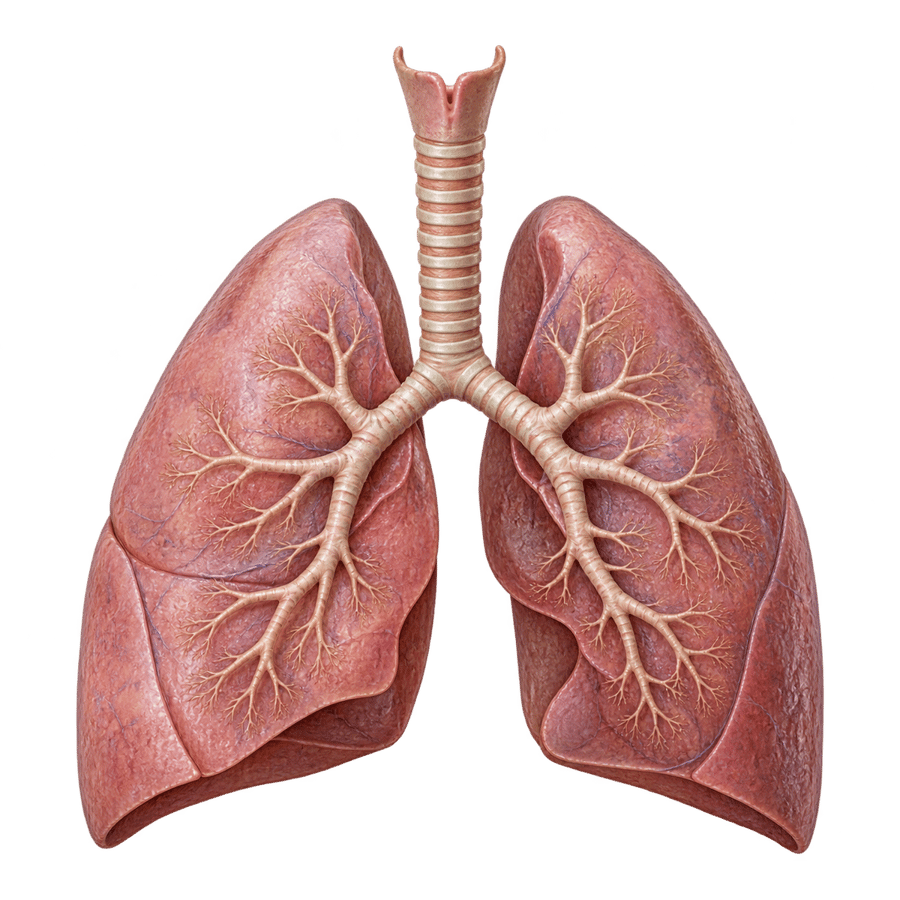
- You breathe in. The vagus nerve’s brake on the heart eases for a moment, and the next few beats come a little closer together.
- You breathe out. The brake presses again, and the beats spread out.
- The heart follows every breath. This is called respiratory sinus arrhythmia. Carl Ludwig recorded it in dogs in 1847, and it’s the largest part of beat-to-beat HRV at rest.
- Slower breaths make bigger swings. A 2022 review pooled 223 studies of slow breathing and found the vagal part of HRV rose during sessions, right after them, and after a course of sessions.
- Other rhythms ride on top. Blood pressure has its own slower wave, and the heart adjusts to it too. These add to the spread of the gaps, which is what SDNN picks up.
Slow breathing is the one thing that raises HRV during the session itself. Whether weeks of it raise your resting number is less clear. In a 2026 trial of 88 adults, four weeks of slow-breathing practice lowered stress and anxiety but didn’t change resting HRV.
Does HRV change across the night?
Yes, and it follows your sleep stages more than the clock.
In a sleep lab study of 14 young adults, the brake side of the nervous system took over as soon as they fell asleep, and the big shifts after that came from moving between sleep stages. Their REM sleep looked, in general, like being awake. A 2013 study of 13 young adults kept in time isolation for three days found the same order: deeper sleep came with more of the brake, REM with more of the accelerator. In deep sleep the brake was strongest around 2 am.
Gyroscope’s old guide said HRV runs highest in REM and lowest in deep sleep. For the measures most devices use, it’s the other way round. In the 2001 study, the part of HRV that follows breathing was 123.7 percent higher in deep sleep than in REM.
Two things follow. First, a night with less deep sleep can show a lower average HRV with nothing else wrong. Second, devices that weight some stages more than others, like WHOOP, get a different number from devices that average the whole night, like Oura. And wearables are rough at telling sleep stages apart: in a 2022 lab test of six devices, the best one matched the gold standard on the exact stage only 65 percent of the time.
Why is HRV lower as you get older?
Because the brake gets weaker. In a study of 260 healthy people aged 10 to 99, RMSSD and pNN50 fell fastest of the measures tested. By the 50s RMSSD was 47 percent of its value in the teens, and then it levelled off. Women under 30 had lower HRV than men, and the gap closed by 50.
You can see the same pattern in wearable data. Oura’s 2026 figures from 6 million members show younger members with higher sleeping HRV than older ones.
This is why we don’t use age tables to tell you whether you’re healthy. The fall with age is normal, and the spread at any age is wide.
Does HRV change with your menstrual cycle?
Yes. A 2026 review of 16 wearable studies found HRV ran 3 to 9 percent higher early in the cycle than late. Women on hormonal contraception had lower HRV, most of all late in the cycle. HRV also tended to fall after menopause, with age. The review called the evidence moderate, partly because studies defined the cycle’s phases in different ways.
So if your number dips in the days before your period, that’s the expected pattern. Comparing this cycle with your last one tells you more than comparing week to week.
What happens in pregnancy?
HRV falls a lot. In 10,318 pregnancies tracked with Oura rings, heart rate rose steadily to about 10 beats a minute above the starting level by week 32, and HRV fell by more than 15 ms in a mirror image. That was the pattern in pregnancies carried to term, so a pregnancy needs its own baseline.
Which things you do change it?
These are covered with their sizes on how to raise it. In short:
| What changed | What it does to HRV | How sure |
|---|---|---|
| Alcohol | One drink above your usual against one below came with HRV 3.8 ms lower in women and 3.3 ms lower in men, in 20,968 WHOOP members | Strong |
| A hard workout close to bed | A maximal workout ending 2 hours before bed came with HRV 8.3 ms lower than a light one, in 14,689 WHOOP members | Moderate |
| Too little sleep | Across 11 sleep deprivation trials, RMSSD fell | Moderate |
| Getting sick | In health care workers wearing Apple Watches, the daily pattern of SDNN changed in the week before a COVID diagnosis | Moderate |
| Months of exercise | Across 16 trials in 623 healthy adults, training raised RMSSD | Moderate |
More detail on the sleep studies
The 2001 study (Trinder and colleagues) measured 14 young healthy adults on three nights in 2-minute slices. Blood pressure and both bands of HRV changed sharply at sleep onset and then stayed steady within each stage, so most change across the night came from moving between stages. Heart rate also drifted with the time of night.
The 2013 study (Boudreau and colleagues) used a 72-hour schedule of alternating 60-minute naps and wake periods in time isolation. That separates the effect of the body clock from the effect of sleep stage. Both mattered. Heart rate and the breathing band of HRV followed a daily rhythm in every stage of non-REM sleep.
A WHOOP research team pointed to the 2001 figure when they argued that comparing a device weighted toward deep sleep with an all-night average can bias the result.
17 sources
- Billman, Heart rate variability: a historical perspective, Frontiers in Physiology, 2011pmc.ncbi.nlm.nih.gov
- Shaffer and Ginsberg, An overview of heart rate variability metrics and norms, Frontiers in Public Health, 2017pmc.ncbi.nlm.nih.gov
- Laborde et al., Effects of voluntary slow breathing on heart rate and heart rate variability: a systematic review and a meta-analysis, Neuroscience and Biobehavioral Reviews, 2022pubmed.ncbi.nlm.nih.gov
- Sumińska, Rynkiewicz and Szulczewski, Resonance frequency versus fixed 0.1 Hz breathing in HRV biofeedback: a four-week randomized comparison, Scientific Reports, 2026pmc.ncbi.nlm.nih.gov
- Trinder et al., Autonomic activity during human sleep as a function of time and sleep stage, Journal of Sleep Research, 2001pubmed.ncbi.nlm.nih.gov
- Boudreau et al., Circadian variation of heart rate variability across sleep stages, Sleep, 2013pmc.ncbi.nlm.nih.gov
- Grosicki and Presby, Accurate comparison of wearables requires contextual equivalence, Physiological Reports, 2025, citing Trinder 2001 on slow wave and REM sleeppmc.ncbi.nlm.nih.gov
- Miller, Sargent and Roach, A validation of six wearable devices for estimating sleep, heart rate and heart rate variability in healthy adults, Sensors, 2022pmc.ncbi.nlm.nih.gov
- Umetani et al., Twenty-four hour time domain heart rate variability and heart rate: relations to age and gender over nine decades, Journal of the American College of Cardiology, 1998pubmed.ncbi.nlm.nih.gov
- de Jager et al., Wearable-derived heart rate variability across the menstrual cycle, hormonal contraceptive use, and reproductive life stages in females: a living systematic review, Sports Medicine, 2026pmc.ncbi.nlm.nih.gov
- Adaimi et al., Temporal trajectories in sleep, temperature trends, cardiorespiratory, and activity metrics measured via Oura Ring during pregnancy, JMIR mHealth and uHealth, 2025pmc.ncbi.nlm.nih.gov
- Oura, What is the average HRV, updated 2026-09-16ouraring.com
- Grosicki et al., Real-world effects of alcohol on heart rate, sleep, and physical activity by age and sex, PLOS Digital Health, 2026pmc.ncbi.nlm.nih.gov
- Leota et al., Dose-response relationship between evening exercise and sleep, Nature Communications, 2025pmc.ncbi.nlm.nih.gov
- Hirten et al., Use of physiological data from a wearable device to identify SARS-CoV-2 infection and symptoms and predict COVID-19 diagnosis, Journal of Medical Internet Research, 2021pmc.ncbi.nlm.nih.gov
- Zhang et al., Effects of sleep deprivation on heart rate variability: a systematic review and meta-analysis, Frontiers in Neurology, 2025pmc.ncbi.nlm.nih.gov
- Amekran and El Hangouche, Effects of exercise training on heart rate variability in healthy adults: a systematic review and meta-analysis of randomized controlled trials, Cureus, 2024pmc.ncbi.nlm.nih.gov