Do your Apple Watch and Oura numbers mean the same thing?
No
On this page
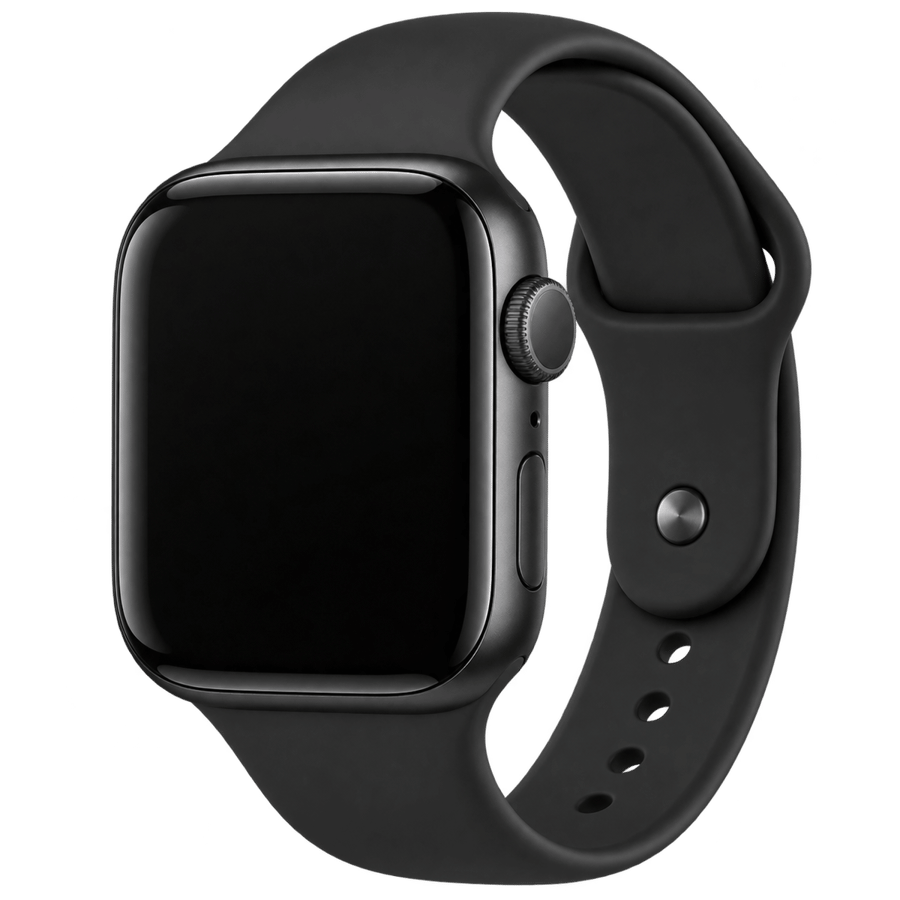
No. Apple Watch reports SDNN. Oura reports RMSSD, and so do WHOOP and Garmin. Both are in milliseconds and both come from the gaps between your heartbeats, but they measure different things about those gaps. You can’t swap them, convert one into the other or average them.
What we’d do
Keep a separate history for each device. Judge Apple Watch numbers only against your own Apple Watch past, and ring numbers only against your ring. If you wear both, check whether they move in the same direction after the same nights. That’s the only comparison that means anything.
If you remember three things
- Same unit, different measurement. SDNN and RMSSD are two ways to sum up the same beats.
- The gap between them changes. It depends on how your heart behaved that night, so no fixed factor converts one to the other.
- Different windows too. Even two RMSSD devices sample different parts of the night.
Why it’s an easy mistake
Both apps call the number HRV. Both put “ms” after it. Many people wear a watch by day and a ring at night, so they see two numbers for the same night and assume one device is broken. Usually neither is.
Is a day’s temperature range the same as how fast it changes?
No, though both are in degrees. Picture a day that warms steadily from 10 to 20 degrees. The range is big, but each hour is only a little warmer than the last. Now picture a day that flickers between 14 and 16 every hour. The range is small, but every hour jumps.
SDNN is like the range: how widely all the gaps between beats spread over the recording. RMSSD is like the hour-to-hour change: how much each gap differs from the one just before.
Six heartbeats, two answers
Take two sets of six gaps between beats, in milliseconds, both at about 59 beats a minute.
| Gaps between beats | SDNN | RMSSD |
|---|---|---|
| 1000, 1040, 1000, 1040, 1000, 1040 (flipping back and forth) | About 20 ms | 40 ms |
| 960, 980, 1000, 1020, 1040, 1060 (a steady drift) | About 35 ms | 20 ms |
On the first set, RMSSD is double SDNN. On the second, SDNN is bigger. Same heart rate, opposite answers. That’s why no formula turns one into the other. The gap between them depends on the pattern of your beats, which changes with breathing, sleep stage and how long the recording runs.
A 2017 review explains why. RMSSD mostly picks up the quick, breath-by-breath swing of the vagus nerve. SDNN also picks up slower waves, which count for more over longer recordings. The same review warns that norms from 24-hour, 5-minute and shorter recordings can’t be swapped for one another.
Even RMSSD devices differ
| Device | What it reports | Window |
|---|---|---|
| Apple Watch | SDNN | Samples through the day and night |
| Oura | RMSSD | Five-minute samples across sleep, averaged for the night |
| WHOOP | RMSSD | A sleep average weighted toward your last deep sleep |
| Garmin | RMSSD | Five-minute windows averaged across sleep |
Two WHOOP scientists wrote in 2025 that a fair comparison needs the same measurement, the same window and the same way of averaging. Apple Watch against Oura fails on all three.
The best case for converting
“Both come from the same heartbeats, so there must be a ratio.” The two often move the same way, because both get bigger when the gaps vary more. Moving together isn’t the same as a fixed ratio. The worked example above flips the ratio with the same heart rate. A 2026 guideline also lists the input signal, the recording length and breathing among the things that change HRV results, all of which differ between a watch and a ring.
What changed with Series 12?
Apple Watch Series 12 and Ultra 4 now show Recovery HRV and overall HRV, measured as often as every five minutes. Apple’s developer documentation now lists an RMSSD data type from iOS 27, alongside the long-standing SDNN one. Apple hasn’t said how Recovery HRV or overall HRV is calculated. Until it does, keep each in its own history, apart from your ring.
9 sources
- Apple Developer Documentation, heartRateVariabilitySDNN, checked 2026-11-10developer.apple.com
- Apple Developer Documentation, heartRateVariabilityRMSSD, listed from iOS 27, checked 2026-11-10developer.apple.com
- Apple Newsroom, Apple advances health and fitness capabilities using Apple Intelligence, September 2026apple.com
- Dial MB et al., Validation of nocturnal resting heart rate and heart rate variability in consumer wearables, Physiological Reports, 2025pubmed.ncbi.nlm.nih.gov
- Oura Help, Heart Rate Variability, updated 2026-10-01support.ouraring.com
- Shaffer F, Ginsberg JP, An overview of heart rate variability metrics and norms, Frontiers in Public Health, 2017pubmed.ncbi.nlm.nih.gov
- Carter JR et al., Guidelines for rigor and reproducibility of heart rate variability within human cardiovascular research, American Journal of Physiology Heart and Circulatory Physiology, 2026pubmed.ncbi.nlm.nih.gov
- O'Grady B et al., The validity of Apple Watch Series 9 and Ultra 2 for serial measurements of heart rate variability and resting heart rate, Sensors, 2024pmc.ncbi.nlm.nih.gov
- Grosicki GJ, Presby DM, Accurate comparison of wearables requires contextual equivalence, Physiological Reports, 2025pubmed.ncbi.nlm.nih.gov