Will breathing exercises raise your HRV in a week?
Not in a week
On this page
Not your overnight number, and not in a week. Slow breathing raises HRV while you do it and for a while after. Over weeks of practice, some trials find a small rise in resting HRV and others find none. Breathe slowly because it calms you, not to move tomorrow’s score.
What we’d do
Use slow breathing, about six breaths a minute, when you want to settle down: before sleep, after a hard meeting, before a talk. Keep any HRV it shows during the session in its own history, apart from your overnight trend. Judge the overnight number by the things that move it, like drinks, sleep and training.
If you remember three things
- During the session, HRV goes up. That’s built into how slow breathing works.
- Resting HRV barely moves. A 4-week trial found no change at all.
- The calm is real. Breathing training lowered stress and anxiety in that same trial.
Why people expect a quick win
Breathing apps show HRV climbing during a session. It’s natural to think that if you do it every day, the baseline will climb too. A week sounds like plenty.
Does flexing make your arm bigger?
It does, while you flex. Your biceps really are bigger for those seconds. But you don’t walk around with that arm all day. A bigger arm at rest takes months of training.
Slow breathing works the same way. It makes the gaps between beats swing more while you’re doing it, because the swing comes from breathing in the first place.
Why breathing moves HRV in the moment
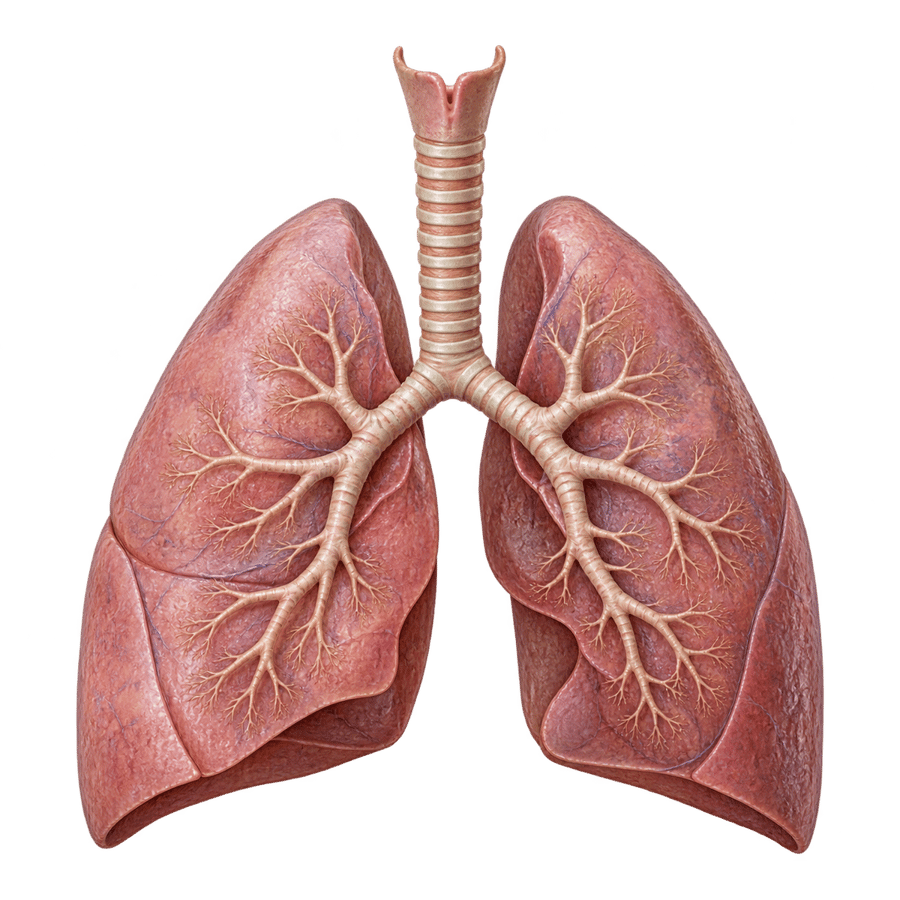
When you breathe in, the vagus nerve eases off and the heart speeds up. When you breathe out, it presses again and the heart slows. A 2017 review describes this breathing-linked swing as the main source of HRV in short resting recordings, especially during slow, paced breathing. Slow, deep breaths make each swing longer and bigger. So the number rises, by design. It’s also why a value taken during a breathing session can’t stand in for a normal morning or overnight measurement.
What the studies show
| Study | Who | Finding |
|---|---|---|
| 223 studies of slow breathing, pooled, 2022 | Many populations | HRV rose during sessions, right after one session, and after programs of several sessions |
| Garmin watches for 3 weeks, 2026 | 90 adults, 632 meditation sessions | RMSSD rose 4.68 ms during meditation and stayed up for at least 30 minutes |
| 4 weeks of breathing training, 2026 | 88 adults, randomized | Stress, anxiety and depression scores fell. Resting HRV didn’t change |
| 18 trials of home breathing training, pooled, 2026 | 1,352 people | A medium rise in HRV and a drop in depression against control groups. No clear effect on stress |
So the trials disagree on the longer run. The pooled reviews find a rise after weeks of practice. The 4-week randomized trial found none.
The best case for breathing
“Two big reviews say training raises HRV, so a daily habit should lift my baseline.” It may, a little, over weeks. The 2026 review of 18 trials found a medium effect on HRV compared with control groups. But the trials varied a lot in who took part and how they measured, and the 4-week randomized trial above found nothing. Overnight, a night with one drink more than usual, against one fewer, came with HRV 3.3 to 3.8 ms lower in 20,968 WHOOP members. Any long-run breathing effect has to show through that kind of noise.
Where breathing does belong
Oura shows daytime HRV only inside some guided sessions and keeps its main number to sleep. That’s a sensible split. Session HRV tells you the breathing is working right now. Overnight HRV tells you how your body is coping overall. Keep them apart and both stay useful.
7 sources
- Laborde S et al., Effects of voluntary slow breathing on heart rate and heart rate variability: a systematic review and a meta-analysis, Neuroscience and Biobehavioral Reviews, 2022pubmed.ncbi.nlm.nih.gov
- Takezawa J et al., Daily stress and heart rate variability among mindfulness meditation practitioners, Journal of Medical Internet Research, 2026pubmed.ncbi.nlm.nih.gov
- Sumińska S, Rynkiewicz A, Szulczewski M, Resonance frequency versus fixed 0.1 Hz breathing in HRV biofeedback: a four-week randomized comparison, Scientific Reports, 2026pubmed.ncbi.nlm.nih.gov
- Vann-Adibe S et al., Efficacy and methodology of remote heart rate variability biofeedback interventions for mental health: a systematic review and meta-analysis, Applied Psychophysiology and Biofeedback, 2026pubmed.ncbi.nlm.nih.gov
- Shaffer F, Ginsberg JP, An overview of heart rate variability metrics and norms, Frontiers in Public Health, 2017pubmed.ncbi.nlm.nih.gov
- Oura Help, Heart Rate Variability, updated 2026-10-01support.ouraring.com
- Grosicki GJ et al., Real-world effects of alcohol on heart rate, sleep, and physical activity by age and sex, PLOS Digital Health, 2026pubmed.ncbi.nlm.nih.gov