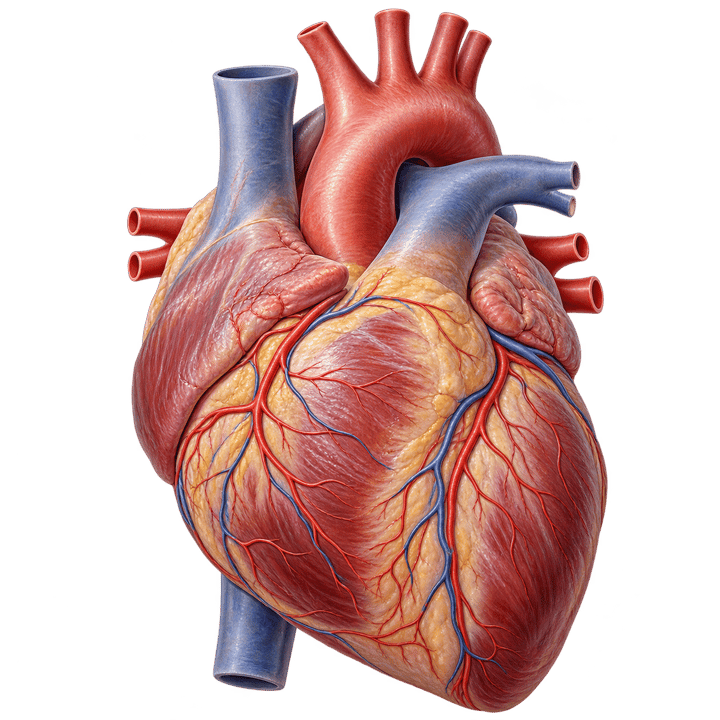
Does your HRV measure how stressed you are?
Not the way you think
On this page
Not the way you think. Stress does lower HRV a little while it’s happening. But a night’s HRV mostly shows what your body is dealing with, such as drinks, illness, hard training and short sleep, more than what your mind is dealing with. In a 3-month study, days people felt stressed had the same overnight HRV as calm days.
What we’d do
Use HRV to see what your nights are carrying. Trust your own sense of how stressed you feel, and don’t let a number overrule it in either direction. If a hard stretch at work shows up as a low week with a higher sleeping heart rate, treat it like any other low week: sleep, fewer drinks, easier training.
If you remember three things
- In the moment, stress lowers HRV a little. About 2 ms in one study of Garmin wearers.
- Overnight, feelings often don’t show. Stressed and calm days had the same night HRV in a 3-month study.
- Drinks move it more than a bad day. One drink more than usual, against one fewer, came with HRV 3 to 4 ms lower.
Why people believe it
Wearable makers describe HRV in stress terms. Apple calls it a key indicator of stress and recovery. The idea has a real root. HRV tracks the vagus nerve, the brake on your heart, and stress lifts that brake. So it sounds like a direct line from your mood to your number.
Is your car’s rev counter a mood meter?
Sort of, but not really. A nervous driver might rev a little harder at the lights, and the needle would show it. But mostly the needle shows what the engine is doing: the hill, the load in the boot, the speed. A calm driver towing a trailer uphill will rev higher than an anxious one coasting downhill.
HRV is the rev counter. Worry is one thing it picks up, and overnight it’s often not the biggest load on the engine.
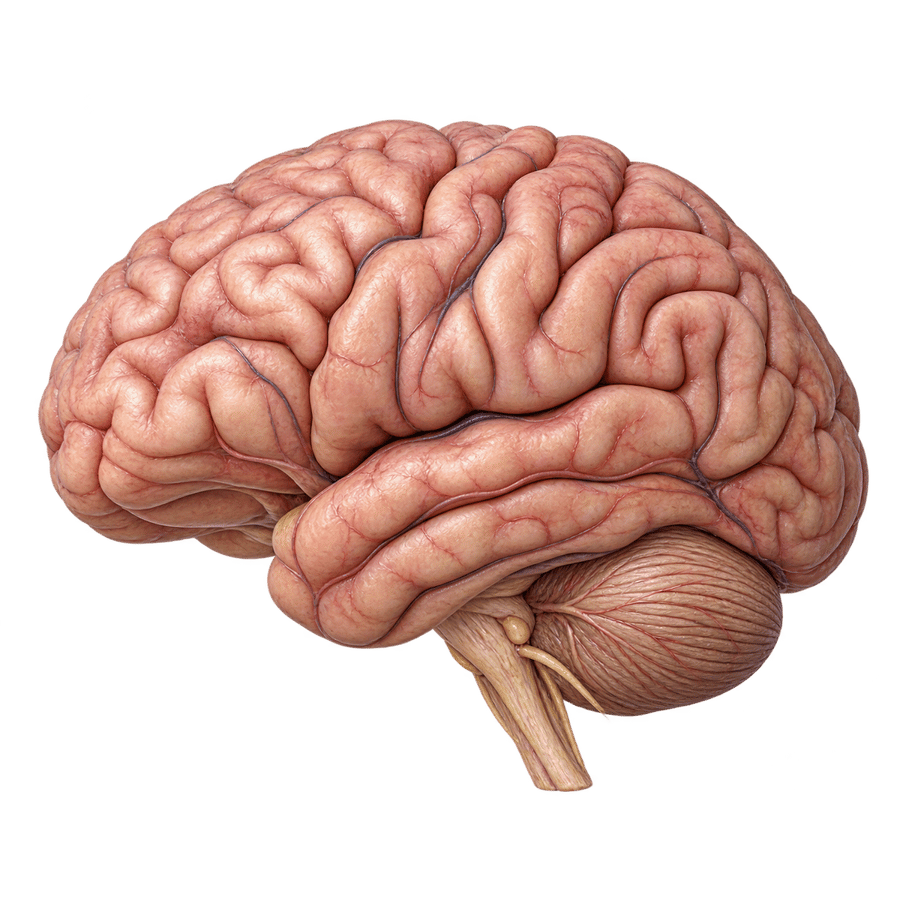
What the studies show
| Study | Who | Finding |
|---|---|---|
| 37 studies, reviewed, 2018 | Stress brought on in many different ways | Most found lower vagal activity under stress |
| Garmin watches for 3 weeks, 2026 | 90 adults | Feeling more stressed went with RMSSD 2.24 ms lower at that moment. A meditation session raised it 4.68 ms, for at least 30 minutes |
| Daily diaries and trackers for 3 months, 2026 | 39 adults | Overnight HRV was 63.5 ms on stressed days and 63.1 ms on calm ones, no real difference. Days people felt energized had lower HRV |
In the Garmin study, people who meditated regularly reported less stress than the control group, yet their HRV over daily life wasn’t any higher. The feeling and the number went separate ways.
What does move a night’s HRV
| Cause | Size |
|---|---|
| One drink more than usual, against one less | HRV 3.8 ms lower in women, 3.3 ms in men, in 20,968 WHOOP members |
| Drinking at all, first 3 hours of sleep | A strap-based recovery measure fell even at low doses, in 4,098 Finnish workers |
| An illness | Heart rate and breathing rate up, HRV down, in 2,745 people with COVID-19 |
Why HRV can’t be a stress meter
A 2026 guideline from 12 cardiovascular researchers says HRV shouldn’t be used as a marker of the body’s fight-or-flight output, or of the balance between that side and the resting side, and warns against making too much of “vagal tone”. HRV also moves with breathing, heart rate and how it’s measured. A 2017 review describes the swing at rest as coming mostly from breathing.
The best case for the stress view
“People with lower HRV report more depression, so it must be measuring the mind.” On average, that link is real. Across five studies using consumer wearables, resting HRV had small links with depressive symptoms, sleep difficulty and blood sugar. Small links across groups are a long way from a meter you can check each morning.
So use HRV as a signal of how your body is coping with everything at once, and keep your own feelings as their own measure.
9 sources
- Kim HG et al., Stress and heart rate variability: a meta-analysis and review of the literature, Psychiatry Investigation, 2018pubmed.ncbi.nlm.nih.gov
- Takezawa J et al., Daily stress and heart rate variability among mindfulness meditation practitioners, Journal of Medical Internet Research, 2026pubmed.ncbi.nlm.nih.gov
- Ungaro CT et al., Disconnection between self-reported wellbeing and heart rate variability from wearables, Sensors, 2026pubmed.ncbi.nlm.nih.gov
- Carter JR et al., Guidelines for rigor and reproducibility of heart rate variability within human cardiovascular research, American Journal of Physiology Heart and Circulatory Physiology, 2026pubmed.ncbi.nlm.nih.gov
- Shaffer F, Ginsberg JP, An overview of heart rate variability metrics and norms, Frontiers in Public Health, 2017pubmed.ncbi.nlm.nih.gov
- Grosicki GJ et al., Real-world effects of alcohol on heart rate, sleep, and physical activity by age and sex, PLOS Digital Health, 2026pubmed.ncbi.nlm.nih.gov
- Pietilä J et al., Acute effect of alcohol intake on cardiovascular autonomic regulation during the first hours of sleep in a large real-world sample of Finnish employees, JMIR Mental Health, 2018pubmed.ncbi.nlm.nih.gov
- Natarajan A, Su HW, Heneghan C, Assessment of physiological signs associated with COVID-19 measured using wearable devices, npj Digital Medicine, 2020pubmed.ncbi.nlm.nih.gov
- Hernandez R et al., Resting heart rate variability measured by consumer wearables and its associations with diverse health domains in five longitudinal studies, Sensors, 2025pubmed.ncbi.nlm.nih.gov